Software Buyers Route Shortlist Research Through Chatbots Before Sellers Reach Them

G2's CMO Alexandra London says vendors are ranked in conversations they never see, which puts their public record in charge of the outcome.


If this caught your attention, that’s not accidental.

The best editorial systems don’t happen by accident. Outlever builds them.


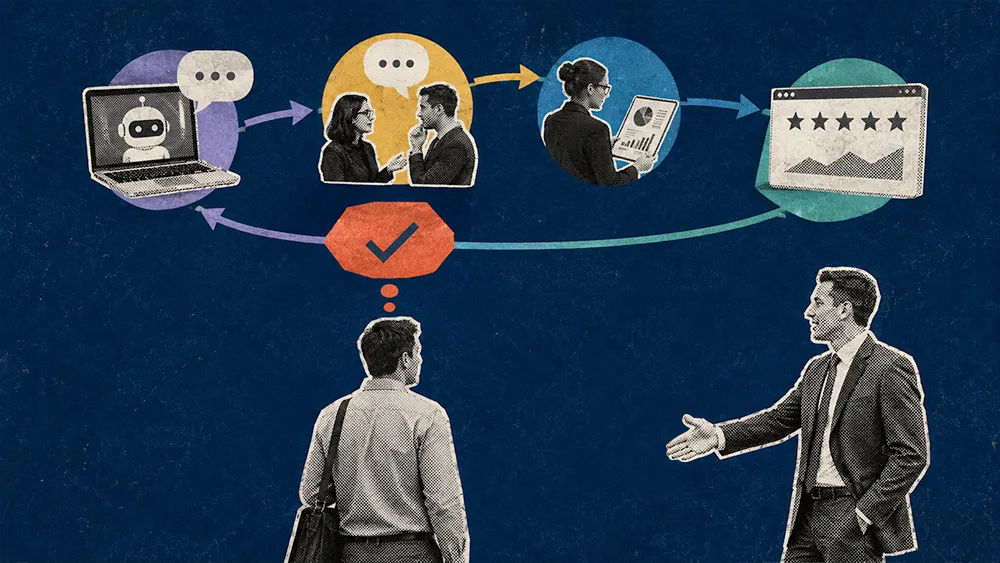
The B2B software shortlist—the three or four names a buyer actually considers before anyone gets a meeting—used to get built somewhere vendors could reach. It formed in search results, in a peer's Slack reply, on an analyst's grid, in the demo a rep talked their way into. Now, a growing share of it gets built in the darkness: inside a chatbot no vendor can see, in a conversation that finishes before a single salesperson learns the buyer exists.
Few people have a sharper view of that shift than Alexandra London, Chief Marketing Officer of G2. G2 is the B2B software review marketplace, the place buyers go to compare tools and read what other companies think of them, which means it sits on the exact buyer behavior most vendors can only guess at. London came to it after more than a decade running search and performance marketing at companies like Zoom and Expedia, so digital discovery is nothing new to her. She named the moment in a post on LinkedIn: "Somewhere right now, a buyer is asking ChatGPT to build their software shortlist."
In G2's research on AI and software buying, 51% of buyers now say they start their research in an AI chatbot more often than in Google, up from 29% eleven months earlier, and chatbots have become the single biggest influence on vendors' shortlists. The consequences land further down the funnel. Sixty-nine percent of buyers ended up choosing a different vendor than they'd planned once the chatbot weighed in, and one in three bought from a company they'd never heard of before the conversation started. That's a lot of pipeline getting redirected in a room the vendor never enters.
A better way to buy
Buyers hand the research to a chatbot because it works better. Building a shortlist used to mean doing the synthesis yourself, opening a dozen tabs and reconciling reviews against pricing pages against the one honest comment buried in a forum thread. Now a model reads all of it and answers in a single prompt.
Tim Sanders, G2's Chief Innovation Officer, describes buyers moving "from reference to inference," trusting the machine for a verdict where they once collected sources and weighed them. The autonomous shortlist is something buyers opted into, because the old way was exhausting.
What shifts is when a vendor's people enter and what they walk into. Qualification, discovery, and proof of value once ran early, all of it aimed at getting into consideration while the list was still open. Those conversations now start with a buyer who has already narrowed the field, which raises what each one is worth. The vendors that win are the ones the buyer's AI already trusts enough to name.
Earning the mention
Vendors are described, compared, and ranked in exchanges they never see, by a system working from whatever public record it finds. Companies that treated reviews and their published presence as housekeeping now watch that material do the deciding. The shortlist gets built before a vendor arrives, and what stays in their hands is what the machine finds when it goes looking.
London puts the question to marketers directly. "What do you think buyers are learning about your product in AI conversations you're not part of?"





Read what the room is reading.
New pieces for growth leaders, delivered as they publish. Unsubscribe whenever.