Your Next Customer May Not Be Human: ZoomInfo's CRO Builds GTM for the Agent Buyer

James Roth, Chief Revenue Officer at ZoomInfo, says agents are running first-round vendor evaluation. That changes what a go-to-market motion has to satisfy.
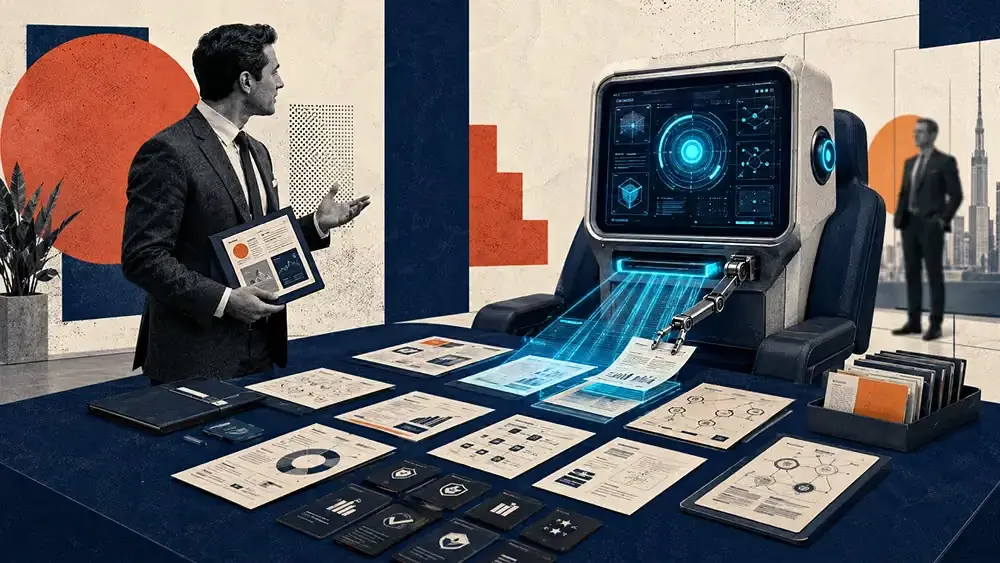
Your next customer may not be human. That shift changes the architecture of B2B.


If this caught your attention, that’s not accidental.

The best editorial systems don’t happen by accident. Outlever builds them.


James Roth spends his working life pointing a very large sales organization at human buyers. He's the Chief Revenue Officer of ZoomInfo, the go-to-market intelligence platform that sells the data, the applications, and increasingly the agents that other companies' revenue teams run on.
"Your next customer may not be human," Roth wrote on LinkedIn. "Agents are beginning to discover vendors, evaluate products, coordinate buying workflows, negotiate transactions, and interact with other agents, while humans remain accountable for high-stakes enterprise decisions. That shift changes the architecture of B2B."
The machine reads you first
The machine buyer shows up first as the research layer. It looks like an agent assembling a shortlist, pulling documentation, comparing pricing, doing the reconnaissance a junior buyer used to do by hand. Long before anything negotiations, the first entity to read your product is often not a person, and it reads nothing like one.
An agent running discovery and evaluation reads differently than a buyer does. Documentation, pricing, and proof get worked through in full, and anything missing registers as missing. Everything a company publishes becomes a data source for someone else's agent.
Where the human still decides
Agents now discover vendors, evaluate products, and coordinate buying workflows, "while humans remain accountable for high-stakes enterprise decisions," Roth notes. The agent absorbs the comparison, and the grind of coordination, and the judgment call stays with the person whose relationships ride on it. Serving the agent buyer serves the person who deployed it, since a product that answers the machine quickly gets its owner to a decision they can defend.
The companies that win build for the agent directly, treating it as a buyer with a job to finish and a go-to-market a machine reads as fast as a person once did. Roth's list runs further out than most GTM teams are planning for, to agents negotiating terms and coordinating with other agents while the human signs off at the end. "Human-first GTM is colliding with machine-native markets," Roth says.





Read what the room is reading.
New pieces for growth leaders, delivered as they publish. Unsubscribe whenever.